Mallorca on the Map: Where It Is and How to Get Here
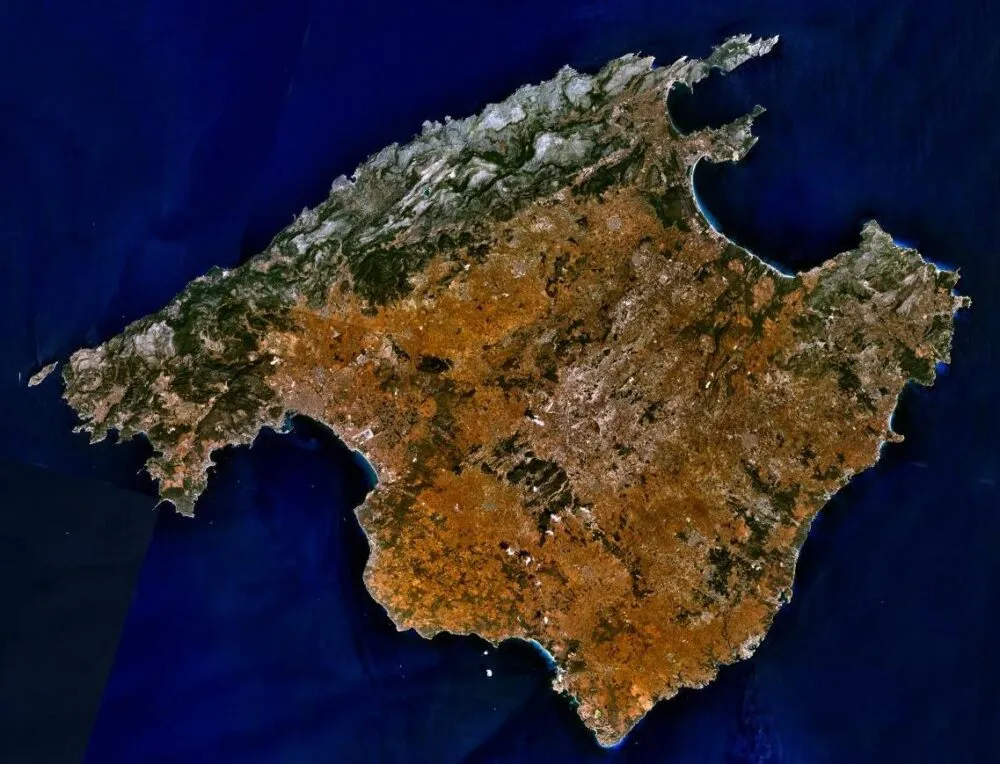
 Map / Explainer
Mallorca turns up on millions of holiday wish lists, but plenty of people booking a trip are not quite sure where it actually sits. The short version: it is a Spanish island in the western Mediterranean, a short hop from the mainland yet far enough out to feel like its own world. Here is exactly where Mallorca is, how far it is from everywhere, and how to get there.
🗺️ Where is Mallorca at a glance
Mallorca is the largest of Spain’s Balearic Islands, lying in the western Mediterranean roughly 170 to 180 km off the east coast of mainland Spain. It belongs to Spain, sharing the Balearic autonomous region with Ibiza, Menorca and Formentera. The island covers about 3,640 square kilometres, with its capital Palma in the southwest where you will find the main airport and port. Despite the distance from the mainland, fast flights make it one of the most accessible islands in Europe.
📌 Quick answer: where Mallorca is
- Mallorca is the biggest of the Balearic Islands, in the western Mediterranean Sea.
- It sits around 170 to 180 km off the east coast of mainland Spain, near Valencia and Barcelona.
- It is part of Spain, alongside Ibiza, Menorca and Formentera.
- The capital is Palma, in the southwest, home to the airport (PMI) and the main port.
- Flights from mainland Spain take under an hour, and from northern Europe two to three hours.
🌍 Mallorca’s location explained
Picture the coast of eastern Spain, then look out into the Mediterranean: the cluster of islands you reach is the Balearics, and Mallorca is the largest of them. It lies south of France and east of the Spanish cities of Valencia and Barcelona, with Ibiza and Formentera to its southwest and Menorca just to its northeast. Sitting at roughly 39 degrees north, it shares the same comfortable latitude as southern Italy and Greece, which is a big part of why the climate is so kind.
For all that island feel, Mallorca is firmly part of Spain. The local languages are Spanish and Catalan (the island’s own variety is called Mallorquí), the currency is the euro, and the time zone is Central European Time, one hour ahead of the UK.
✈️ How far is Mallorca and how to get there
Getting to Mallorca is easy, which is why it is so popular. Palma de Mallorca Airport, just 8 km east of the city, is one of the busiest in Spain and handles direct flights from cities all over Europe. From mainland Spain the hop is tiny, and even from northern Europe it is a short flight. If you would rather travel by sea, car ferries run from several mainland ports, handy if you want to bring your own vehicle.
| From | Flight time | Ferry |
| Barcelona | around 45 minutes | around 7 to 8 hours |
| Valencia | around 50 minutes | around 6 to 9 hours |
| Madrid | around 90 minutes | not direct |
| London | around 2 hours 20 minutes | not direct |
Once you land, getting from the airport into Palma is quick. Our guide to buses in Mallorca covers the cheap airport line, and the taxis guide covers fares if you prefer a direct ride.
🧭 Getting around once you are there
Mallorca is bigger than many visitors expect, so it pays to plan how you will explore. The island has a genuinely useful public transport network, and in 2026 the interurban buses, train and metro are free with a travel card, which makes car-free trips remarkably cheap. The vintage Palma to Sóller train is a destination in itself, while cyclists flock here for the mountain roads, covered in our guide to bike rental in Palma. For the highlights you can reach without a car, see our day trips guide.
🛏️ Where to stay on the island
Where you base yourself shapes the whole trip. Palma suits city lovers who want culture, food and nightlife on the doorstep, the north around Pollença and Alcúdia is calmer and close to the mountains, and the east and south have the famous turquoise coves. Our guide to the best areas to stay in Palma and the wider island helps you match a base to your plans, and the best time to visit Mallorca guide covers the seasons.
📐 Size, geography and regions
Mallorca is far more varied than its beach-holiday image suggests. The northwest is dominated by the Serra de Tramuntana, a dramatic mountain range that runs the length of the coast and is a UNESCO World Heritage Site, with peaks rising above 1,400 metres. The centre is a flat agricultural plain known as Es Pla, dotted with old stone villages and almond groves, while the east and south are where you find the postcard coves of fine white sand and clear turquoise water. All told the island has hundreds of kilometres of coastline, which is why no two resorts feel quite the same.
Locals tend to think of the island in regions: the buzzing southwest around Palma and its bay, the calmer mountainous north around Pollença and Alcúdia, the cove-studded east coast, and the quiet rural interior. Knowing roughly where each sits helps enormously when you choose where to base yourself.
🌤️ Why the location makes Mallorca special
Sitting in the heart of the western Mediterranean gives Mallorca its famously gentle climate: long warm summers, short mild winters and a sea that stays swimmable from late spring into autumn. The island enjoys a great deal of sunshine across the year, which is why visitors come not just in peak summer but for spring cycling, autumn walking and even winter city breaks in Palma. That reliable weather, paired with the short flight times, is the real reason the island has become one of Europe’s favourite escapes.
❓ FAQ
Where is Mallorca located?
Mallorca is in the western Mediterranean Sea, around 170 to 180 km off the east coast of mainland Spain near Valencia and Barcelona. It is the largest of the Balearic Islands.
Is Mallorca part of Spain?
Yes. Mallorca is Spanish, part of the Balearic Islands autonomous region along with Ibiza, Menorca and Formentera. The languages are Spanish and Catalan, and the currency is the euro.
How far is Mallorca from the Spanish mainland?
About 170 to 180 km from the east coast of Spain. Despite that, flights from Barcelona or Valencia take under an hour, and ferries run from several mainland ports.
How long is the flight to Mallorca?
Roughly 45 minutes from Barcelona, about 90 minutes from Madrid, and around two to three hours from most of northern Europe, landing at Palma airport 8 km from the city.
What is the capital of Mallorca?
Palma, often called Palma de Mallorca. It sits in the southwest of the island and is the main gateway, home to the international airport and the port.