Beach Guide: Cala Llombards – How to Get There & What to Expect
 Guide
Guide
🏖️ Cala Llombards at a glance
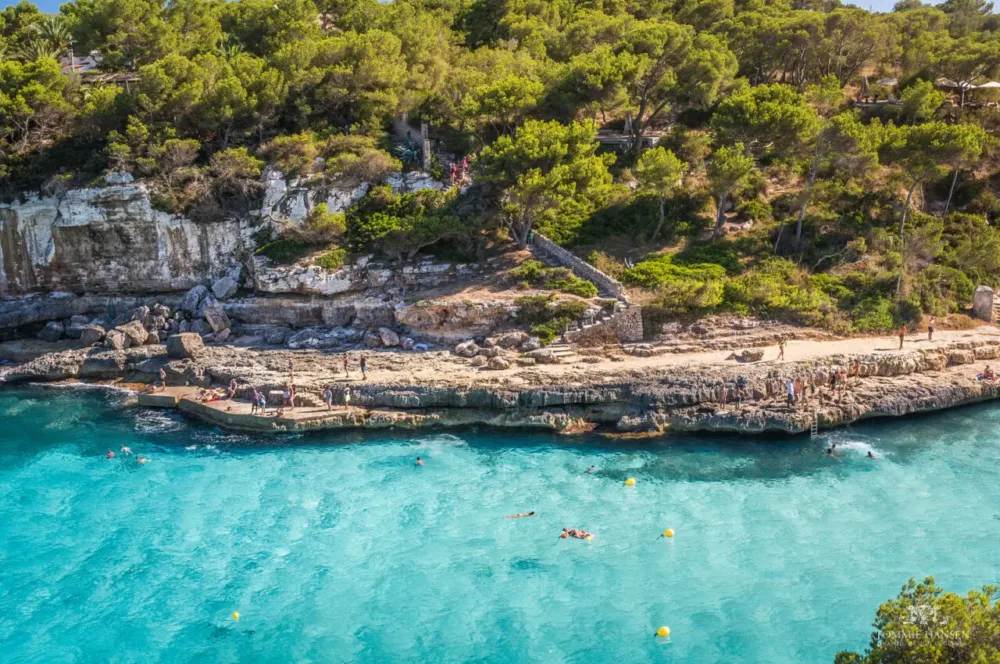
Cala Llombards is one of southeast Mallorca’s prettiest small coves — a sheltered horseshoe of fine white sand and clear turquoise water, framed by low cliffs and pine trees near the town of Santanyí. It is calm, family-friendly and genuinely scenic, without the scale or noise of the big resort beaches. If you want a classic Mallorcan cove that still has proper facilities — lifeguards, a beach bar, sunbeds and easy parking — Cala Llombards is one of the safest choices on this stretch of coast.
This guide covers exactly how to get there from Palma, where to park, what facilities to expect, the best time to visit, and the famous neighbouring coves you can reach on foot.
📌 Quick answer
- Where: Southeast Mallorca, near Santanyí (municipality of Santanyí).
- From Palma: about 58 km, roughly a 45–50 minute drive via the MA-19.
- Best for: families, couples and swimmers who want a calm cove with facilities.
- Parking: free car park by the beach (~100 spaces) — arrive before 11:00 in July/August.
- Don’t miss: the 20-minute cliff walk to Caló des Moro and Cala s’Almunia.
- Season: facilities (lifeguards, toilets, beach bar) run roughly May–October.
Book your stay near Cala Llombards — compare hotels, villas and apartments around Santanyí and the southeast coast, all on one map.
📍 How to get to Cala Llombards from Palma
Cala Llombards sits about 58 km southeast of Palma. The drive is straightforward and takes around 45–50 minutes outside peak traffic.
🚗 By car (the easy option)
Follow the MA-19 motorway out of Palma towards Llucmajor, Campos and Santanyí. At Santanyí, take the MA-6100 and, at the roundabout on the edge of the village, follow the signposted exit for Cala Llombards. The simplest approach is to set your GPS to “Cala Llombards” and follow it to the beach car park (you can open Cala Llombards in Google Maps to preview the route). A car gives you the freedom to combine the cove with the nearby beaches in a single day.
🅿️ Parking
There is a free car park right at the foot of the beach with roughly 100 spaces, plus an overflow area near the village entrance by the roundabout, and some street parking on the north side. It is well organised but small, so in July and August it fills by mid-morning. Aim to arrive before 11:00, or come after 16:00 when the early crowd starts to leave.
🚌 By bus and taxi (no car)
There is no direct bus from Palma to the beach itself. The practical route is to take a TIB bus to Santanyí (line 501 from Palma), then either a short summer-only local connection or a roughly 10-minute taxi for the final 7 km to the cove. Without a car, budget close to two hours each way, so most car-free visitors either rent for the day or join an organised southeast-coast beach excursion. For the wider picture, see our guides to buses in Mallorca and taxis in Mallorca.
📊 Cala Llombards quick facts
| Feature | Details |
|---|---|
| Location | Southeast Mallorca, near Santanyí |
| Distance from Palma | ~58 km / 45–50 min by car |
| Beach type | Small sandy cove between cliffs and pines |
| Water | Shallow, clear, calm — good for swimming & snorkelling |
| Facilities (May–Oct) | Lifeguards, toilets, showers, sunbeds & parasols, beach bar |
| Parking | Free, ~100 spaces, fills early in summer |
| Best time to visit | Before 11:00 or after 16:00 in peak season |
🌊 What to expect at the beach
The cove is compact — only around 30–40 metres of sand — so it feels intimate and gets busy quickly in high season. The water is the main draw: shallow and exceptionally clear close to shore, deepening gently, with rocky, pine-topped sides that are ideal for snorkelling. On calm days you’ll see plenty of fish along the cliff edges. There is some natural shade from the pines at the back of the beach in the morning, but it disappears by midday, so bring a parasol if you want guaranteed cover.
The atmosphere is relaxed and family-oriented. There is no loud beach-club scene, no water-sports operation and no nightlife — this is a swim, snorkel and sunbathe beach, not a party one. If you enjoy snorkelling, it pairs well with our guide to snorkelling in southeast Mallorca.
✅ Best for
- Families with children — calm, shallow, easy water entry
- Couples wanting a scenic, low-key cove
- Snorkelling and swimming along the cliffs
- Photographers (early light and the cliff-and-pine backdrop)
⚠️ Less ideal for
- Travellers without a car (awkward and slow by public transport)
- Anyone wanting a big beach, water sports or beach clubs
- Peak-summer visitors arriving at midday (parking and space run out)
- Large groups needing lots of room to spread out
🍴 Food and drinks
Right by the sand, Chiringuito Cala Llombards is a relaxed beach bar serving cold drinks, sandwiches, ice cream and fresh local seafood — regulars rate its scallops, razor clams and tuna. It covers most beach-day needs, but bring cash as a backup. For a fuller meal, the town of Santanyí (about 10 minutes’ drive) has a good cluster of restaurants and cafés, from local Mallorcan cooking to modern bistros, plus a well-known Saturday and Wednesday market.
🚶 Nearby coves worth the walk
One of the best reasons to base yourself at Cala Llombards is how close it is to two of the island’s most photographed inlets. From the Cala Llombards car park, a clifftop path leads to:
- Cala s’Almunia — about a 15-minute walk; a tiny rocky inlet with old fishermen’s boat houses and weathered wooden doors, beloved by photographers.
- Caló des Moro — roughly 1.5 km / 20–25 minutes on foot; the postcard cove of turquoise water and white sand. Note that it has no facilities at all: no toilets, no sunbeds, no beach bar, and steep, uneven steps down.
Wear proper shoes for the path and carry water. For the full rundown, see our dedicated guide to Caló des Moro & Cala s’Almunia.
🏨 Where to stay nearby
Cala Llombards itself is residential and quiet, with holiday villas and apartments rather than big hotels. For more choice, Santanyí, Cala Santanyí and the Colònia de Sant Jordi area are the natural bases for exploring the southeast coast, while staying in Palma keeps you closer to the airport, dining and city life. Compare your options below, and see our guide to the best beach hotels in Mallorca and the best areas to stay in Palma.
Compare places to stay near Cala Llombards and the southeast coast — hotels, villas and apartments in Santanyí, Cala Santanyí and Colònia de Sant Jordi.
❓ FAQ
Is Cala Llombards good for families?
Yes. The water is shallow and calm near the shore, there are lifeguards in season, and the car park is close to the sand — all of which make it easy with young children.
Is there a direct bus from Palma to Cala Llombards?
No. You take a TIB bus to Santanyí (line 501 from Palma) and then a summer-only local connection or a short taxi for the last few kilometres. A car or an organised excursion is far more practical.
How much does parking cost?
Parking is free, but the lot is small (around 100 spaces) and fills early in July and August. Arrive before 11:00 or after 16:00 in peak season.
Can you snorkel at Cala Llombards?
Yes — the clear, sheltered water and rocky, pine-fringed sides make it one of the better easy-access snorkelling coves in the southeast.
What’s the best time of year to visit?
May, June, September and early October offer warm water with smaller crowds. July and August are busiest, so go early in the day. Facilities such as lifeguards and the beach bar generally run from around May to October.
🔗 Related guides from Palma Weekly
- Caló des Moro & Cala s’Almunia Guide
- Snorkelling in Southeast Mallorca
- Best Beach Hotels in Mallorca
- Best Areas to Stay in Palma
- Buses in Mallorca
- Taxis in Mallorca
For more, see our guide to the best beaches in Mallorca.