Cala Figuera Mallorca: Fishing Village & Harbour Guide
 Guide
Guide
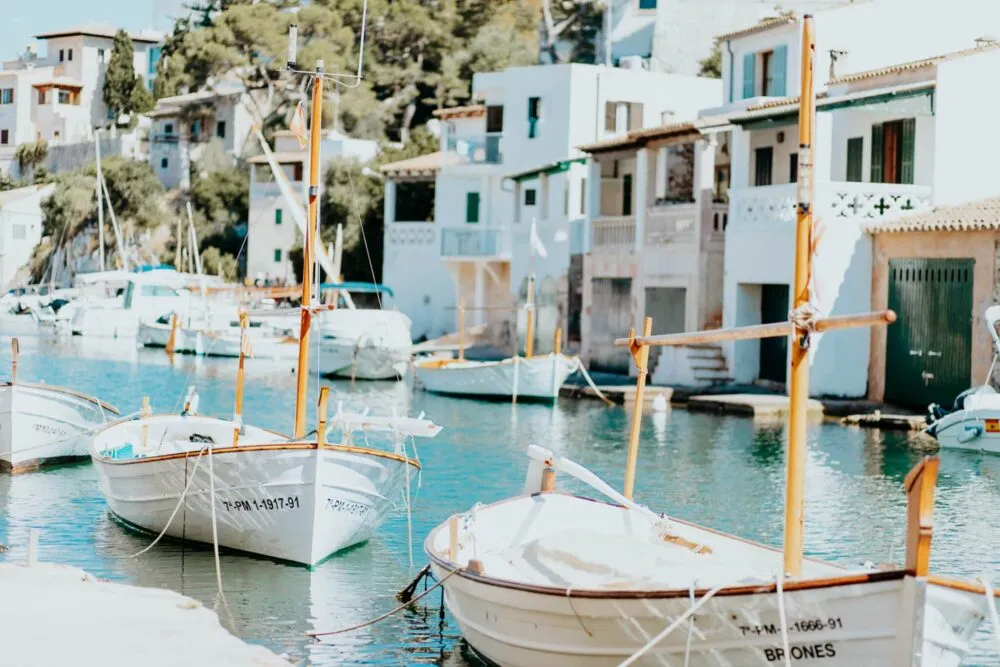
Cala Figuera is the most photogenic fishing village on Mallorca’s southeast coast, a pair of narrow inlets lined with whitewashed boathouses and bobbing llaut boats. It is not a beach resort but a living harbour, and a wander along its quays at sunset is one of the prettiest, most authentic experiences on the island.
⚓ Cala Figuera at a glance
Cala Figuera lies in the municipality of Santanyi, around five kilometres from the town and about fifty minutes from Palma. It is a small, close-knit fishing community built around two fjord-like inlets, where traditional wooden llauts still tie up beneath the fishermen’s houses with their characteristic boat garages. There is no sandy beach here; the appeal is the harbour itself, the seafood, and a small rocky cove for a swim. It is a place to slow down rather than sunbathe.
| Cala Figuera | Detail |
| Where | Santanyi, southeast coast of Mallorca |
| From Palma | around 50 minutes by car |
| Type | working fishing village and harbour, no sandy beach |
| Swimming | small rocky cove with clear water, stony access |
| Best for | photography, seafood, harbour walks, snorkelling |
| Nearby | Parc de Mondrago, Cala Santanyi, Santanyi town |
📌 Quick answer: is Cala Figuera right for you?
Visit Cala Figuera if you love authentic fishing villages, harbour scenery, fresh seafood and a quiet, photogenic spot away from the resorts. It is not the place for a classic beach day, since there is no sand, but it pairs perfectly with the sandy coves nearby.
- Best for: photographers, foodies, couples, anyone after a traditional Mallorca harbour.
- Good to know: there is no sandy beach and the rocky cove has stony access, so combine it with Mondrago or Cala Santanyi for swimming.
- Do not miss: the harbour at sunset, when the fishermen mend their nets and the light turns golden.
🚤 The harbour and village
The heart of Cala Figuera is its working harbour, split into two slender inlets where wooden llauts rock gently against the quay. Whitewashed fishermen’s houses line the water, many with little garages at sea level where boats are hauled up, and the whole scene has barely changed in decades. Walking the quaysides, watching nets being mended and boats coming and going, is the main pleasure here, and it is utterly photogenic in the soft light of early morning or evening.
🏊 The cove and swimming
From the harbour a steep footpath over stones and scree leads down to the small rocky cove of Cala Figuera. There is no sand, but the water is crystal clear and the rocky edges are good for snorkelling and diving, which is why those in the know make the scramble down. Wear sturdy shoes for the access and bring water shoes for the rocks. If you want a sandy swim, the beaches of Cala Mondrago and Cala Santanyi are only a short drive away.
🍽️ Eating and nearby sights
The quayside is lined with restaurants where the catch of the day comes straight off the boats, making fresh seafood the obvious choice. Beyond the village, the Parc Natural de Mondrago spreads northeast with its protected coves and walking trails, while the handsome golden-stone town of Santanyi, ten minutes away, is known for its weekly market and boutique shops. Small boat trips also run from the harbour to nearby coves in season.
🚗 Getting to Cala Figuera
Cala Figuera is on the southeast coast, around fifty minutes from Palma by car, which is by far the easiest way to reach it. Public transport to this corner is limited, so plan on driving or taking a taxi for the last stretch. For wider island travel see our guides to buses in Mallorca and taxis in Mallorca.
🛏️ Where to stay near Cala Figuera
Cala Figuera and the surrounding Santanyi area offer a mix of small hotels, guesthouses and holiday homes with real local character, well suited to a quiet, scenic base on the southeast coast. It puts the fishing village, the coves and the Mondrago nature park all within easy reach. Our guide to the best areas to stay helps you compare, and the best time to visit Mallorca guide flags the quietest months for this kind of trip.
🏝️ Nearby beaches and coves
Cala Figuera is the gateway to some of the island’s prettiest southeast coves. A short drive brings you to the sandy beaches of Cala Santanyi and the twin coves of Cala Mondrago within their nature park, while the resort of Cala d Or and its marina lie a little further along the coast, so you can easily pair the fishing village with a proper beach day.
Is Cala Figuera a beach?
Not in the usual sense. Cala Figuera is a working fishing village with a beautiful harbour rather than a sandy beach. There is a small rocky cove reached by a steep, stony path where you can swim and snorkel, but there is no sand, so most visitors come for the village and the views.
Where is Cala Figuera?
Cala Figuera sits on the southeast coast of Mallorca in the municipality of Santanyi, about five kilometres from the town of Santanyi itself and roughly fifty minutes by car from Palma.
What is there to do in Cala Figuera?
Wander the twin inlets and quayside, watch the traditional llaut boats and fishermen mending their nets, eat fresh seafood at the harbour restaurants, and snorkel off the rocky cove. The Parc Natural de Mondrago and the coves of Cala Santanyi and Cala Mondrago are close by.
Can you swim at Cala Figuera?
Yes, from the small rocky cove, where the water is clear and good for snorkelling, but access is over stony ground and there is no sand. For a proper sandy swim, the nearby beaches at Mondrago and Cala Santanyi are a better bet.
How do you get to Cala Figuera?
It is about fifty minutes from Palma by car along the southeast coast, which is the easiest way to visit. Public transport is limited out here, so driving or a taxi for the final stretch is usually best.